Germany Targets Russian Shadow Fleet Amidst Escalating Tensions
Following an alleged Russian drone attack on Leipzig Airport on September 1st, the German government announced retaliatory measures, including a tougher stance against Russia's "shadow fleet." This fleet consists of aging, poorly maintained, and inadequately insured ships, often oil tankers with unclear ownership, used by Russia to bypass international sanctions.
Detaining these vessels is not straightforward, according to Julian Pawlak, a maritime security expert at the German Council on Foreign Relations (DGAP). International maritime law generally protects freedom of navigation, and transporting goods by sea is not inherently illegal. However, Pawlak notes that some ships in the shadow fleet are linked to "hybrid activities," such as sabotage, espionage, drone operations, and disruptions.
Green Party security politician Sara Nanni argues that Germany has been too inactive in combating this issue. In a recent DW interview, she stated, "The Russians are financing their war against Ukraine and their aggressive behavior towards Europe through their shadow fleet." She believes taking action against it is the only way to compel Russia to return to the negotiating table.
Nanni criticizes the German government's inaction, saying, "Other nations are doing it in the Baltic Sea, Germany is not. I hear from the Interior Minister that it's technically or legally difficult. But I believe it's a political decision not to do it. And I believe that's wrong."
Finland Leads the Way
By "other nations," Nanni refers to countries like Finland. In late 2024, the tanker "Eagle S." dragged an anchor across the seabed in the Gulf of Finland, damaging the Estlink 2 power cable. The Finnish Border Guard detained the vessel.

Although a Finnish court later dismissed the case for severe property damage, security expert Sönke Marahrens of Kiel University praised Finland's actions in a DW interview. "They sent a clear signal to the other side and said, 'We know what you are doing, and we are stopping you!' And it was evident that after this clear statement, the other side understood and changed their behavior."
Beyond Finland, the UK, France, and Sweden are also taking a firm stance against suspicious vessels. The Swedish Coast Guard actively stops and inspects tankers and freighters in its territorial waters suspected of belonging to the shadow fleet. Ships are consistently detained if they use forged documents, lack sufficient insurance, pose maritime security risks, or violate environmental laws.
Are Russia's Threats Just Bluster?
The German government's reluctance might stem from a desire to avoid escalation with Russia, especially given the rise of the AfD party, which advocates for improved German-Russian relations despite the war in Ukraine, in recent state elections. Concerns about war in Europe were also a significant factor for voters. Russian Foreign Minister Sergey Lavrov even called Germany's accusations against Moscow the "beginning of a real war."
However, Johannes Peters from the Institute for Security Policy at Kiel University believes this fear is unfounded. "Other European states are acting more robustly, and contrary to fears, and especially contrary to Russian rhetoric, nothing is actually happening. Russia is not escalating, but rather avoiding it. We see that, in particular, loaded tankers, which are extremely valuable, are currently avoiding Swedish waters because the Swedes have increased ship stops."
Chancellor Friedrich Merz had stated after the attempted attack in Leipzig: "The federal government is imposing a price on perpetrators of hybrid attacks. They will pay for it." Johannes Peters now comments, "If you make strong statements, you eventually have to follow them up with actions. The Chancellor has put the federal government under pressure."
Armed Russian Crews Onboard
However, inspecting suspicious Russian ships is not without risk, according to Julian Pawlak. "Of course, one must consider when undertaking such actions, for example, if Russian warships escort such ships or, as has been observed more frequently, if armed crews with ties to Russian mercenary groups are onboard. Such risks must be factored in."
Estonia experienced this firsthand with the oil tanker "Jaguar." In May 2025, its captain ignored instructions from Estonian authorities while in their coastal waters. The Estonians attempted to stop and inspect the suspicious ship, prompting Russia to scramble a fighter jet. The Estonians backed down, and the tanker was allowed to proceed.
"It is important to consider in which region these activities are carried out," says Pawlak. "In the Baltic Sea, Russia is geographically much closer and naturally has other options, including deploying military units for support. Further away, for example, in the English Channel between Great Britain and France, it's more difficult. Russia cannot escort or protect every shadow fleet ship."
Inspections Would Increase Costs for Russia
While acknowledging the validity of taking action against shadow fleet ships, security expert Johannes Peters warns against illusions. "We will not be able to dry up this system with these inspections. Instead, the goal is to burden this shadow fleet system with risks and uncertainties for Russia and to increase costs."

He provides a quantitative example: "If instead of three ships per day, only one ship can sail per day, that's a loss of revenue in the two- to three-digit millions per day. If transit takes not x days but x plus 4 days – all of this reduces Russian revenue. And revenue from oil exports is existential for the Russian war economy."
Fresh materials — World News
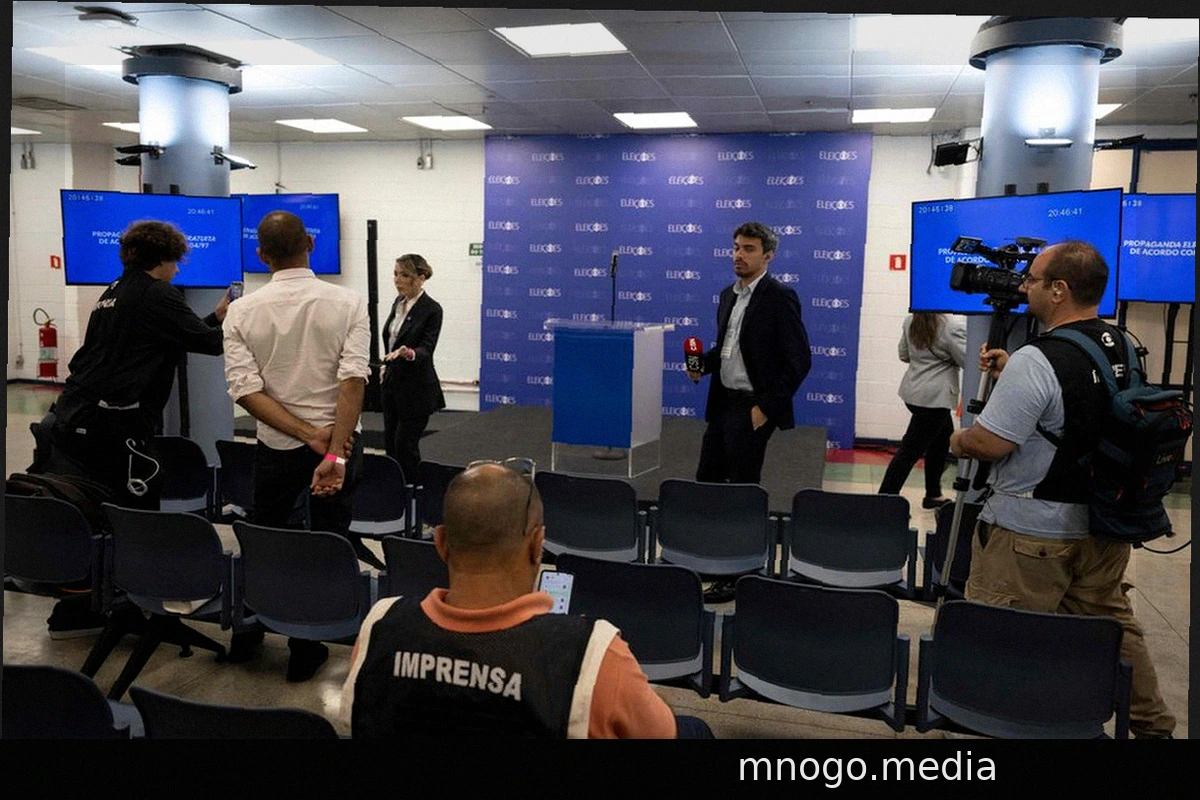
Brazil: Judicial intervention in TV debate sparks controversy before Lula-Bolsonaro election
Two days before Brazil's presidential election, the judiciary faces criticism for intervening in the final TV debate planned before the vote. Three Brazilian media associations on Friday voiced their "deep indignation over judicial interference in previously established rules." Globo, the broad

Germany Secures First Nations League Victory Under Jürgen Klopp
Germany has recorded its first victory in the Nations League with Jürgen Klopp at the helm. Original German: Nations League: Deutschland feiert ersten Sieg unter Jürgen Klopp English Translation: Nations League: Germany celebrates first victory under Jürgen Klopp

Donald Trump Acknowledges Image Problem Ahead of Midterms
About a month before key legislative elections, US President Donald Trump has indicated he's aware of his long-standing low approval ratings. Speaking to employees of a truck manufacturer in Denton, Texas, he praised his own policies as usual. He then stated that the only thing

Crew-13 Launches to ISS: Two Americans, a Canadian, and a Russian Head to Space
Two American astronauts, a Canadian, and a Russian cosmonaut have departed for the International Space Station (ISS). The Crew-13 mission launched from Cape Canaveral, Florida, aboard a SpaceX Falcon 9 rocket. NASA expects the crew to reach the ISS eight hours after liftoff, potentiall

DFB-Team: Pavlović and Bischof Shine in Klopp's Squad
The German national football team's recent performance spotlighted the impactful presence of Pavlović and Bischof within the squad, shaped by coach Klopp's strategies. Their contributions were central to the team's dynamics. In the team's latest outing, midfielder Pavlović demonstrated si

Turkey Shuts Down Independent Online News Outlet Over Alleged "LGBTQ+ Propaganda"
The Turkish government has ordered the closure of the independent online news outlet "T24". The Ministry of Justice announced the decision, stating the news portal engaged in "LGBTQ+ propaganda" as part of the "My Family is Safe" operation, a crackdown on LGBTQ+ l