Groundwater Dispute: Water for Frankfurt, Drought for Birstein?
The small streams above Birstein have dried up, the meadows are yellow to brown, and cows can no longer find grass. Even the onset of rain doesn't change this immediately. This is because two million cubic meters of drinking water flow from the small Hessian community to Frankfurt every year. For decades, the city's water has come from the Vogelsberg, whose water resources were long considered inexhaustible. However, doubts about this have been growing, and not just since this year.
Günther Lißmann, spokesperson for the community of interest for the protection of the water balance in the Vogelsberg, expressed frustration when the water supplier Hessenwasser urged water conservation while simultaneously stating that there was fundamentally enough water available. Lißmann sees a lack of awareness of the problem, stating, "Frankfurters are not aware of where their water comes from and how much they consume." He believes the metropolis's water-saving efforts are insufficient. The mayor of Birstein, Fabian Fehl (SPD), notes growing unrest in his community. A few days prior, a large forest fire in a neighboring district further heightened these concerns.
The residents of Birstein have no influence over what happens to the groundwater beneath their land, as German law dictates that water has no owner. Three years ago, the Kinzig Water Association, a municipal company, applied to double the extraction volume, and the Darmstadt regional council approved it. This reignited an old conflict: in the 1980s, massive protests occurred, pumping wells were set on fire, and there was talk of a "Birstein Water War." The situation only calmed down after the extraction volume was limited. In 2023, the environmental organization BUND and the municipality of Birstein filed a lawsuit against the regional council's decision at the Administrative Court of Frankfurt. A decision is still pending.
Uncertainty Factor: Climate Crisis
When granting permits, authorities like the regional council adhere to the principle that only a small portion of the water is extracted to allow for sufficient replenishment. Water researcher David Kuhn explains, "This involves complex models that consider past precipitation. The climate crisis is the major uncertainty factor." Because no one can precisely predict how groundwater replenishment will develop against this backdrop, there is concern in some regions that too much is already being consumed today.
At the Institute for Social-Ecological Research in Frankfurt, where Kuhn works, a widely noted study was published last year examining whether too much groundwater is being extracted nationwide. The researchers assumed that an extraction of 20 percent of the newly formed water volume is sustainable. This value is considered a guideline in the scientific community but can vary regionally. According to Kuhn, around 80 percent of the newly formed groundwater should remain underground to prevent damage to dependent ecosystems. The study's conclusion was that this benchmark is exceeded in many regions of Germany.
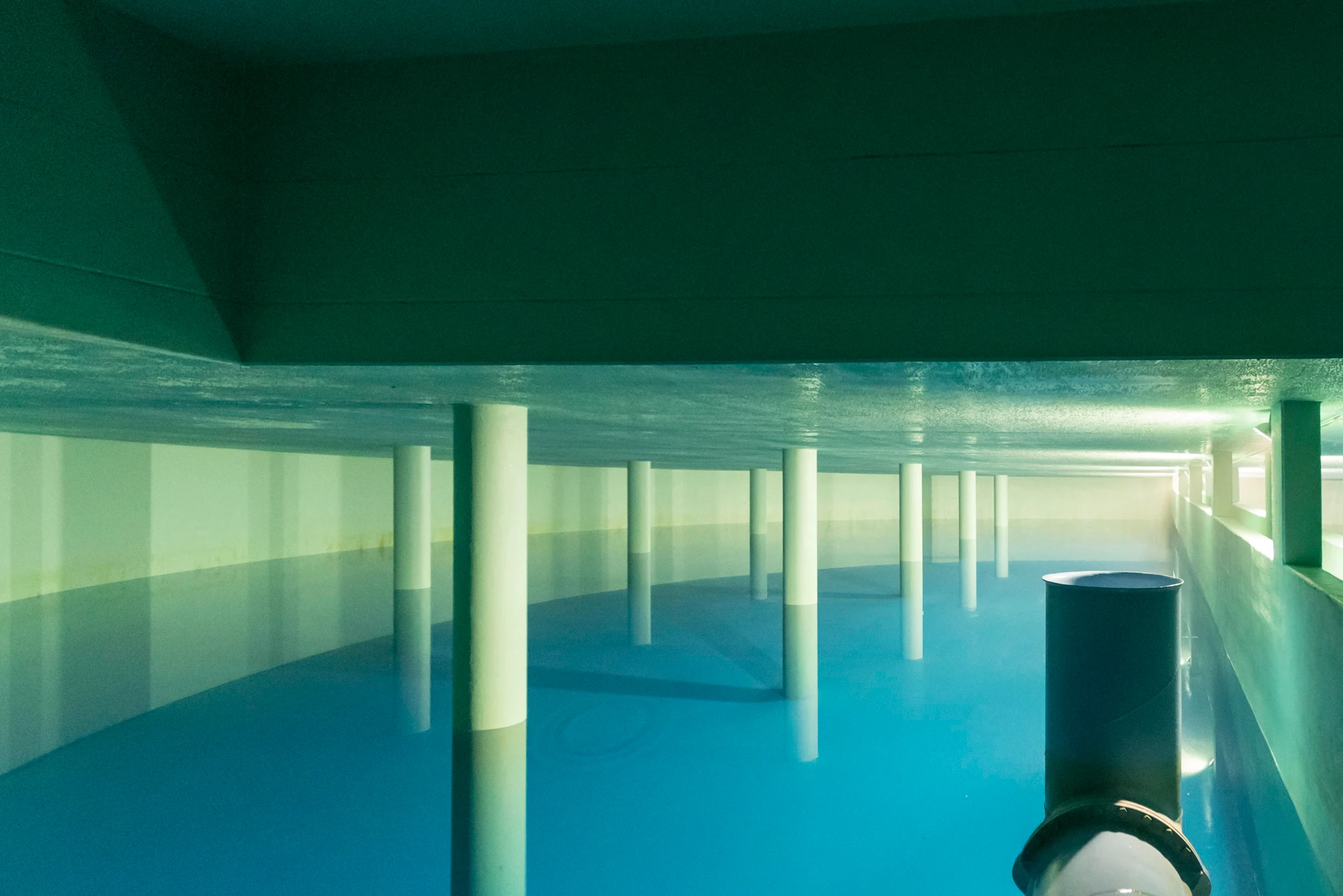
The situation has likely worsened this year. As of late July, more than 150 out of 288 groundwater levels nationwide were low, very low, or extremely low, according to the low water information system of the Federal Institute of Hydrology. Cities like Munich and Offenbach have warned of water scarcity. "If the groundwater level drops, it can have severe consequences for ecosystems and lead to a severance of connections to surface waters," says water researcher Kuhn.
Birstein Does Not Benefit from Water Extraction
As a result of the lowering groundwater levels, water from large rivers can seep into the groundwater, leading to a drop in river levels and a general deterioration of groundwater quality in deeper earth layers. This can make the treatment of groundwater into drinking water significantly more complex than before.
In Birstein, the consequences of water extraction are debated. Overall, the levels have also dropped significantly over the years. While the citizens' initiative in Birstein considers the ecological consequences to be a given, water suppliers deny this. The municipality is now establishing its own measurement points to create a "better factual basis," according to the mayor.
Recently, another water-related conflict has emerged in Birstein. An eleven-hectare data center with an IT capacity of up to 200 megawatts is planned to be built by 2028. Beyond the size of the project, many citizens are concerned about the high water consumption required for cooling. Mayor Fehl points out that the water volume has been contractually limited to 10,000 cubic meters. "This is only a small fraction of what flows into the Rhine-Main region." In contrast, the community benefits from payments from the company into a fund used to finance insulation for public and private buildings in the town, totaling approximately 20 million euros over 15 years.
Activist Lißmann finds the data center somewhat too large but acknowledges the payments and potential economic benefits for the rural region. He notes that a total of seven million cubic meters of "most valuable drinking water" flow from the Vogelsberg, including from communities surrounding Birstein, to the Rhine-Main area, and for this, they receive "not a cent."
Fresh materials — Society News
The Trier Administrative Court: Why the Trier Asylum Court is One of the Fastest in Germany
On a Wednesday morning, shortly before ten, the brothers Abdul and Josef Salam H. are in Courtroom 1 of the Administrative Court of Trier, lodging a complaint against the Federal Republic of Germany. Josef Salam, 24, fidgets nervously, while his 22-year-old brother Abdul looks aro
IAA Transportation: Trucking Industry Faces Electrification Challenges
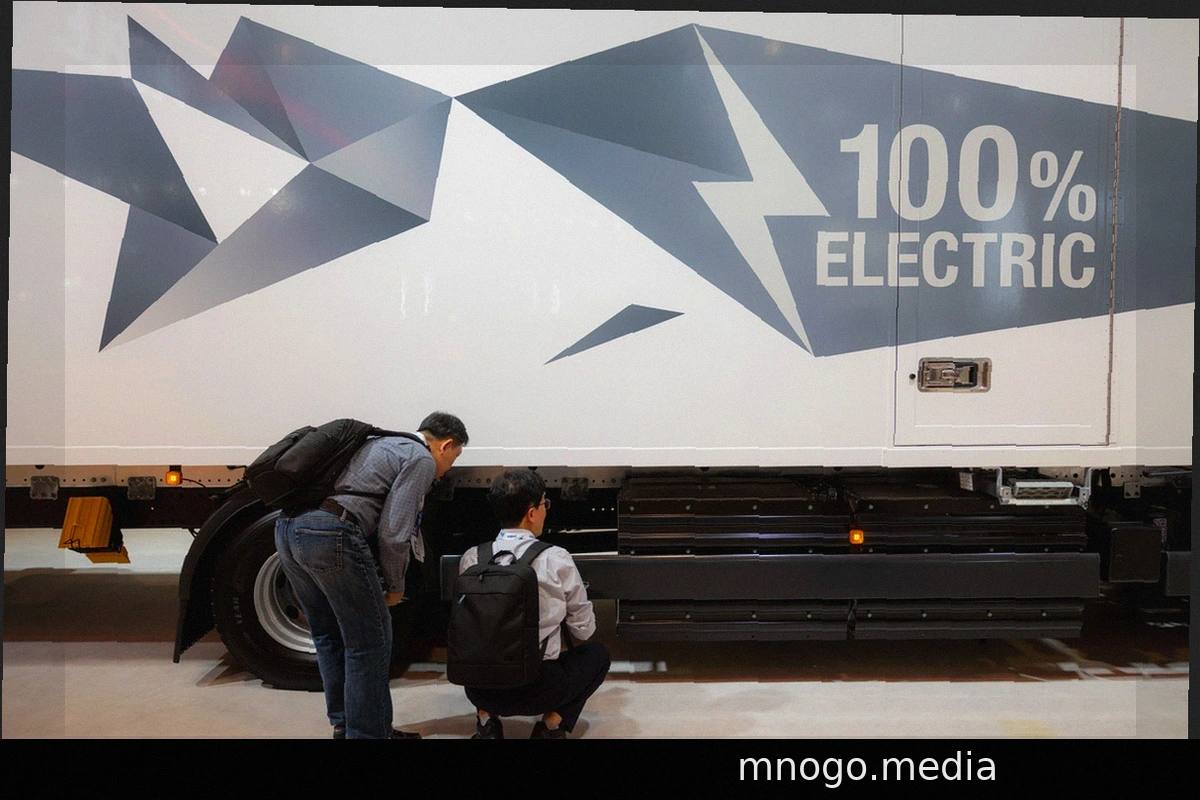
Daimler Truck made a bold statement at the IAA Transportation truck show: "We have delivered." This declaration, displayed prominently on stage, reflects not only the company's confidence in developing a leading electric heavy-duty truck but also growing frustration. The necessary inf

Alexander Zverev Claims Second Major Title at US Open Final
Alexander Zverev was ready. Ready for his opponent's next serve, ready for the next return, ready for the next game in the final. But suddenly, he understood there would be no next game. Zverev had miscounted; he had already won the match. He raised his arms, laughed, and cheered. As

Apple Unveils Foldable iPhone Duo and Other New Products
Apple has launched its inaugural foldable smartphone, the iPhone Duo. Unlike many competing products in a similar form factor, it boasts a comparatively wide 5.4-inch external display and an internal screen that expands to 7.6 inches. To view the inner display, both titanium halves un

When AI Does Everything: Who Wants to Read Anymore?
Literary scholars like Erik Schilling are not the first to herald the impending demise of the author in the face of artificial text generation, styling chatbots like ChatGPT as the unlikely successors to Roland Barthes. Long before the emergence of an "hermeneutics of fear" that constantly per

Ruppert Claims Gold in Steeplechase, German Mixed Relay Secures Silver at European Championships in Birmingham
Frederik Ruppert of Tübingen has been crowned European champion in the 3000m steeplechase. The 29-year-old athlete achieved his first major career title in Birmingham with a time of 8:25.33 minutes, narrowly defeating Ruben Querinjean of Luxembourg (8:25.61). Karl Bebendorf of Dresden secur